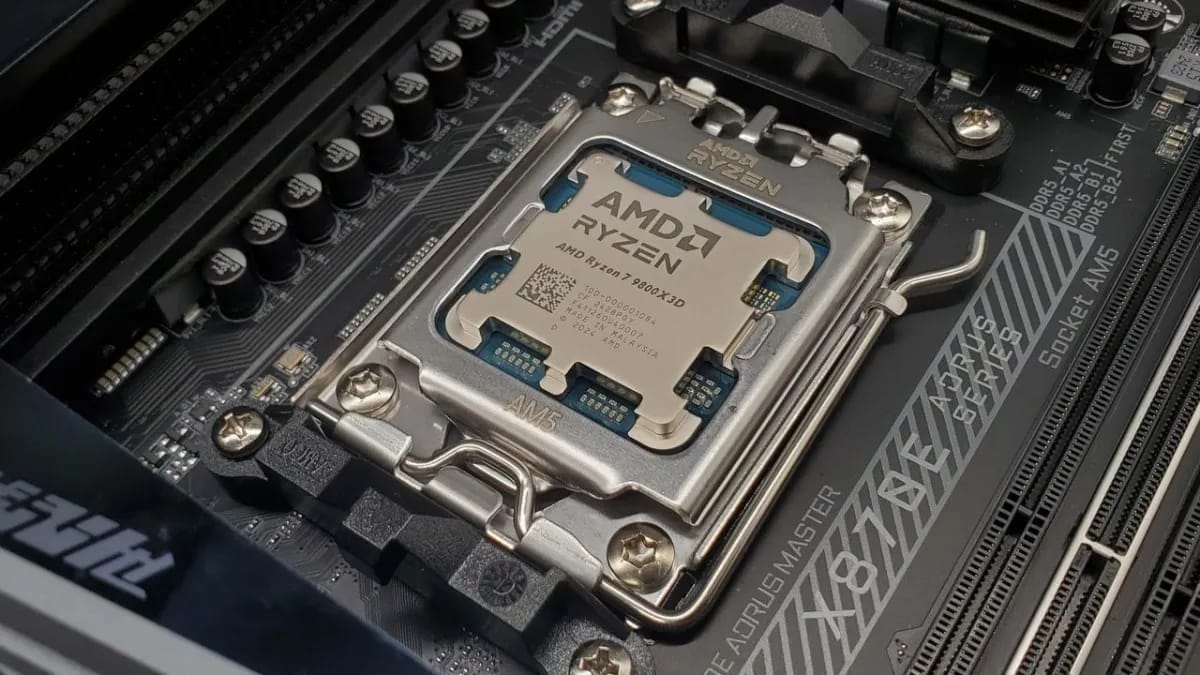
At Computex 2026, AMD confirmed that the AM5 socket will be supported by new processors through at least 2029 — an upgrade from the "2027 and beyond" commitment the company made back in 2024. Alongside that, AMD announced EXPO Ultra Low Latency, or EXPO ULL, a new memory overclocking profile that promises up to 4% better gaming performance compared to a standard EXPO setup.
The extended AM5 lifespan means the socket will span Ryzen generations from the 7000-series all the way through to potentially the 11000 or 12000-series, assuming AMD sticks to its current naming scheme — which, admittedly, isn't guaranteed. Zen 6 chips are expected sometime later this year or in early 2027, and the 2029 commitment implies Zen 7 will also land on AM5. Whether existing X870 or B850 boards will actually support those future chips depends on BIOS chip size, but boards with larger BIOS storage stand a decent chance. As for EXPO ULL, catching that 4% performance gain requires an updated motherboard BIOS and a new DDR5 kit with the updated profile — and the gains are really only meaningful at 1080p with high-end hardware, where RAM becomes the actual bottleneck. That makes it an esports-crowd feature more than anything else.
AM5 is already shaping up to rival the legendary AM4 socket in terms of longevity — AM4 is still receiving new chips even now. Socket longevity is one of the main reasons PC enthusiasts gravitate toward AMD over Intel, and the prospect of dropping a future Ryzen 9 11950X3D into a board currently running a Ryzen 5 9600X is genuinely appealing for upgrade-minded builders.
AMD hasn't given a firm release date for EXPO ULL. Given the cost of new DDR5 kits and the narrow use case, it's a nice-to-have rather than a must-upgrade for most people — but for competitive players chasing every frame at 1080p, it's worth watching.
Sources (1)
AI-assisted summary, reviewed by our editors — how we work.
Get the daily digest
Top gaming news in Lithuanian — every day at 9:00.