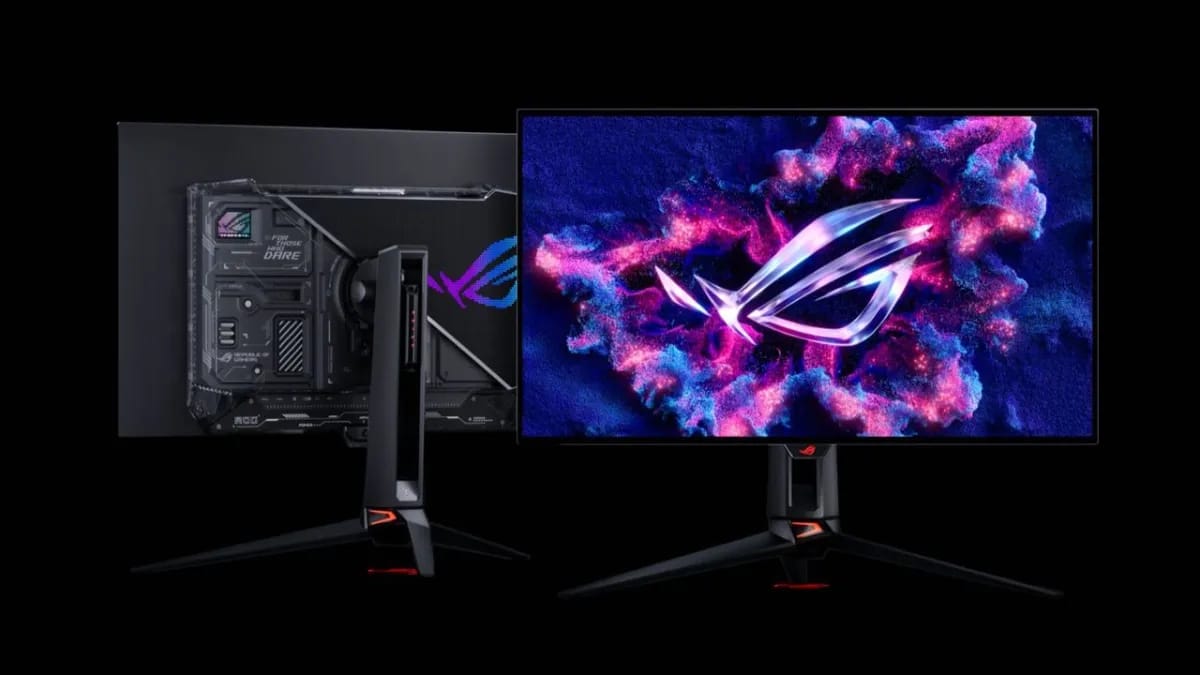
Asus has unveiled the ROG Swift PG32UCWM at Computex — a 32-inch 4K OLED monitor built around a brand-new LG WOLED panel that uses a proper RGB-stripe subpixel layout for the first time. That means red, green, and blue vertical subpixels in the conventional order, no exotic workarounds.
The monitor runs at 240 Hz in 4K and offers a 480 Hz mode at 1080p. It carries VESA DisplayHDR True Black 400 certification and hits 1,000 nits peak HDR. Asus hasn't quoted a full-screen brightness figure, but it'll likely land somewhere between 250 and 275 nits. That's where the problem starts: you can already buy 32-inch 4K QD-OLED monitors — like the MSI MPG 322UR X24 — with True Black 500 certification and higher brightness. Samsung has also announced another 32-inch 4K panel with True Black 600, 360 Hz, and RGB-stripe subpixels arriving later this year. That upcoming Samsung panel makes the new LG WOLED look a step behind even at launch. The lower brightness is somewhat surprising given that the panel uses LG's latest Tandem OLED tech — the likely culprit is the removal of the white subpixel that LG has traditionally used to push brightness numbers up. Worth clarifying: the "W" in WOLED doesn't stand for a white subpixel — it refers to the white base emissive OLED material, which is then filtered through red, green, and blue layers per subpixel.
Despite the brightness gap, the RGB-stripe move matters. LG's previous panels relied on that extra white subpixel, and Samsung used a triangular layout — both approaches introduced image quality quirks that a standard RGB-stripe structure avoids entirely. The technology is spreading fast, and it wouldn't be a stretch to say most OLED gaming monitors will be RGB-stripe within a year.
The broader picture is that OLED gaming monitor tech is moving at a serious pace right now, with brighter panels arriving almost weekly. Burn-in remains the last lingering concern, but the evidence from existing panels keeps pointing toward it being a manageable issue — and newer panels are supposed to be even more resilient. If brightness keeps climbing at this rate, OLED gaming monitors are getting very close to the finished article.
Sources (1)
AI-assisted summary, reviewed by our editors — how we work.
Get the daily digest
Top gaming news in Lithuanian — every day at 9:00.