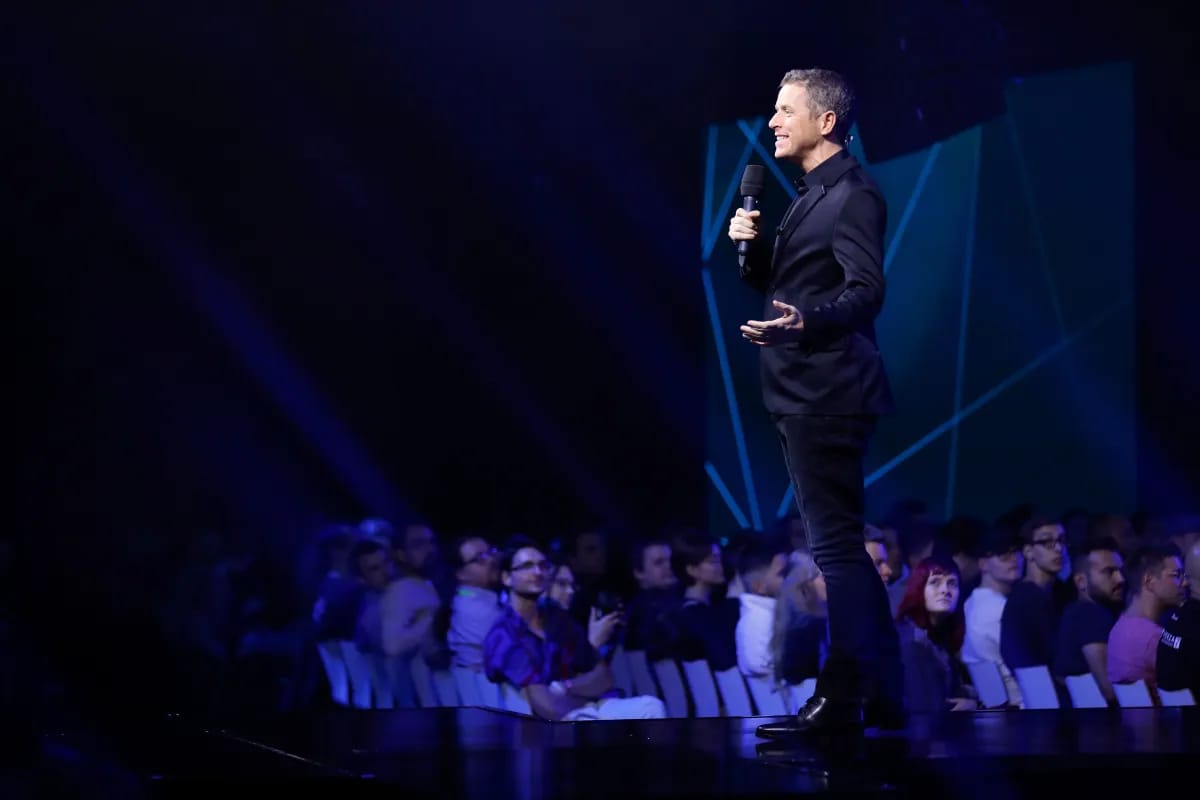
Polygon's Oli Welsh argues that Summer Game Fest has a fundamental problem: Geoff Keighley already built a better replacement for E3 — it just happens to be in December.
Keighley stepped away from E3 in early 2020, citing concerns about its pivot toward an influencer-heavy public festival. What he didn't say directly was that E3 reeked of desperation. The COVID-19 pandemic finished the job — the 2020 show was canceled, a virtual edition in 2021 was widely panned, and the event never meaningfully recovered. Keighley had seen it coming and started building Summer Game Fest as an alternative: online trailer showcases with a small press-facing in-person component. The catch is that unlike E3, which was organized by the industry body ESA, Summer Game Fest has no real institutional stakeholders beyond Keighley himself. PlayStation, Xbox, and Nintendo all prefer making announcements near each other — but not too near — so they follow their own calendars.
The Game Awards launched in 2014, though Keighley had been involved in its precursors for years before that. Through sheer determination he turned it into a genuine fixture of the industry year, landing in December — as far from June as the calendar allows. It's now the only show that can match the Big Three's platform showcases for announcement impact, and all three regularly participate.
That's the bind Summer Game Fest can't escape: it remains a diffuse hype event in June, while its own creator's December show owns the calendar slot that actually matters.
Sources (1)
AI-assisted summary, reviewed by our editors — how we work.
Get the daily digest
Top gaming news in Lithuanian — every day at 9:00.