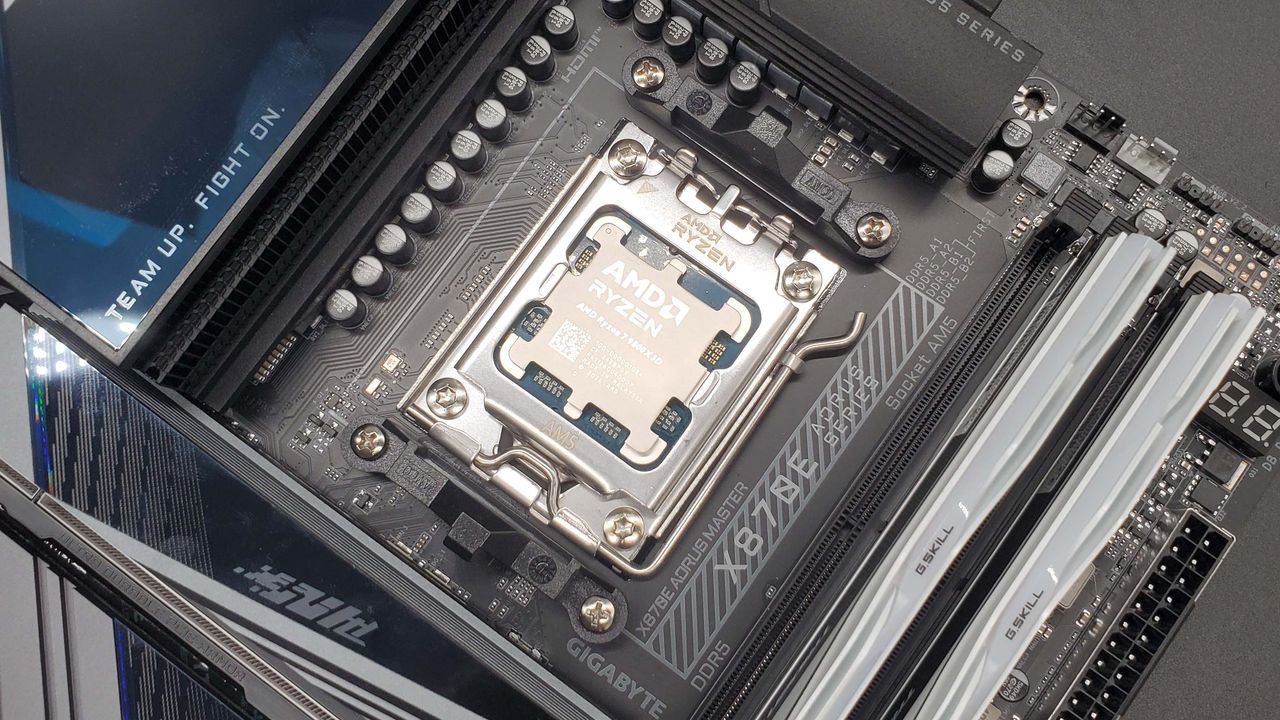
Moore's Law is Dead (MLID) is claiming with "100% confidence" that AMD's upcoming Zen 6 desktop CPUs will clock above 6.5 GHz — which would beat the current record held by the Intel Core i9-14900KS at 6.2 GHz. AMD has already confirmed Zen 6 is arriving later this year, so the timeline isn't in question, just the specs.
MLID says the high clock speeds are made possible by TSMC's N2 process node. That part is plausible: AMD has officially confirmed its next-gen EPYC server CPUs based on Zen 6 will use TSMC N2 silicon. If the same node applies to desktop dies, AMD will have effectively skipped N3 entirely, jumping straight from N4 — which is really just a minor N5 variant — to N2. For context, AMD's current fastest desktop chips, the Ryzen 9 9950X and Ryzen 9 9950X3D, top out at 5.7 GHz. MLID also claims each Zen 6 CPU die will pack 12 cores, and since top Ryzen CPUs traditionally use two dies, that points to 24 cores total — a significant jump from the 16-core ceiling desktop Ryzen has been stuck at for several generations. N2 also brings a larger transistor budget, which means more headroom for both complexity and raw performance.
MLID doesn't have a perfect track record, though the channel has broken accurate leaks before. IPC gains for Zen 6 are still unknown, but the combination of higher clocks, more cores, and a new process node suggests the multi-threaded performance uplift could be substantial. The current AMD gaming flagship, the Ryzen 7 9800X3D, is built on N4 — effectively an N5-class node.
Zen 6 desktop CPUs are due later this year, so the wait shouldn't be long. If these rumours hold up, AMD would reclaim the clock speed crown from Intel while simultaneously making a big leap in core count — one of the more consequential desktop CPU upgrades in recent memory.
Sources (1)
AI-assisted summary, reviewed by our editors — how we work.
Get the daily digest
Top gaming news in Lithuanian — every day at 9:00.