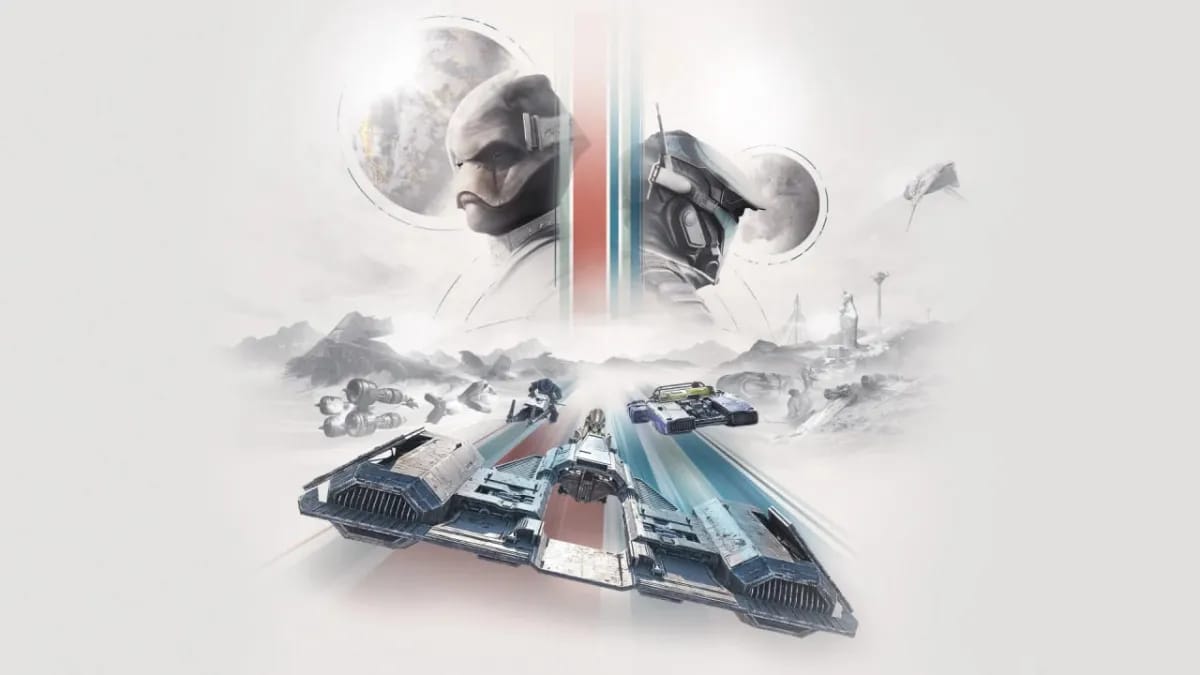

Star Wars: Galactic Racer is a $60 arcade racer from Fuse Games, published by Secret Mode, set in the gap between Return of the Jedi and The Force Awakens. It imagines a full racing culture built around landspeeders, speeder bikes, and skim speeders across single-biome planets backed by crime syndicates.
Fuse Games was founded by ex-Criterion developers who worked on the Burnout series and helped DICE with the modern Star Wars Battlefront games, and that DNA shows. Takedowns send rivals smashing into walls in satisfying slow-motion, Burnout-style — but unlike Burnout 3, the CPU doesn't steer for you during those cinematic moments, which means you can come out of a takedown pointed straight at a wall at 450 km/h. The core speed system balances a modest afterburner on cooldown against a faster ramjet boost that risks overheating, and status effects like Cooled (triggered by high speed or water) and Burning (from lava or an opponent's flame jets) add a layer of heat management to every race. The cast of rivals includes an ex-TIE Fighter pilot, a hateable villain named Kestar Bool, and a paddock full of rich kids who could pass for real-life Formula One drivers if they weren't blue or speaking Huttese.
Despite the Burnout pedigree, takedowns are a supporting act rather than the main event — this is a proper racing game that happens to occasionally erupt in spectacular crashes, not a crash-fest with racing in between. The comparison to Wipeout is apt: you scrape, bounce, or explode on contact with the environment rather than losing all your speed instantly. The Star Wars setting does real work here, leaning into the franchise's tradition of genre mashups — the podracing scene in The Phantom Menace was itself lifted from Ben Hur, and Galactic Racer extends that logic into a full racing universe rather than recreating a single iconic sequence the way Episode 1 Racer did.
The review was conducted on Windows 11 with an Intel Core i9, 32GB RAM, and an Nvidia RTX 4060; multiplayer is confirmed, and Steam Deck compatibility is currently unknown.
Sources (2)
AI-assisted summary, reviewed by our editors — how we work.
Get the daily digest
Top gaming news in Lithuanian — every day at 9:00.
Related on Star Wars: Galactic Racer

Star Wars: Galactic Racer's Biddy Blas goes viral and Lucasfilm Games producer loves it
A minor NPC from Star Wars: Galactic Racer has become the breakout star of the game's launch window. Biddy Blas, a Crocin racer with an enor...

Star Wars: Galactic Racer launches on Xbox, PS5, and PC — free for Amazon Prime members via Luna
Star Wars: Galactic Racer, the roguelike arcade racer from Fuse Games, is out today on Xbox Series X|S, PS5, and PC. Amazon Prime members ca...