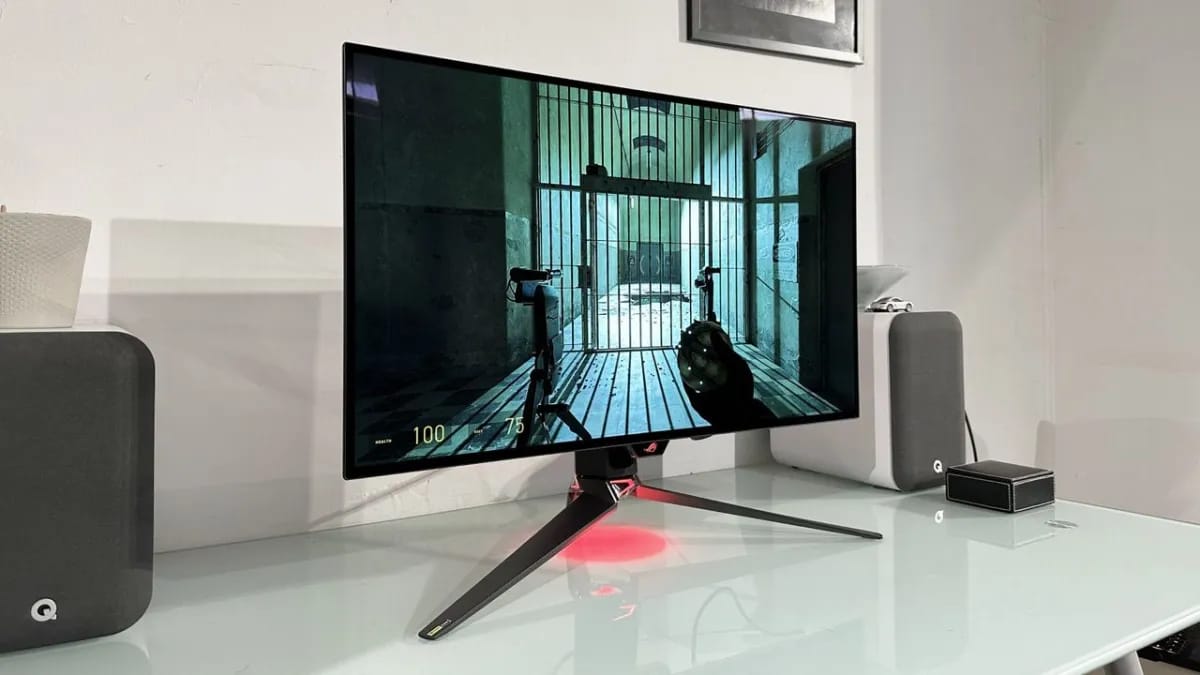
The Asus ROG Swift PG32UCWM is a 32-inch 4K OLED gaming monitor built around LG's latest Tandem WOLED panel — but with a key twist: it uses an RGB-stripe subpixel structure instead of the RGWB layout LG has relied on for years. That makes it one of the most technically interesting OLED monitors on the market right now, even if it isn't quite the definitive answer to the gaming monitor question.
The specs are strong across the board: 3,840 x 2,160 resolution, 280 Hz refresh rate (480 Hz in 1080p dual mode), 0.03 ms response time, G-Sync support, two HDMI 2.1 ports, DisplayPort 1.2.1, and USB-C with 90W power delivery. The panel is rated at 250 nits full-screen and 1,000 nits peak HDR, earning DisplayHDR True Black 400 certification. The RGB-stripe layout — red, green, and blue subpixels arranged vertically — delivers sharper font rendering, more accurate colours, and a wider colour volume compared to RGWB panels. The catch is brightness: removing the white subpixel costs you real-world luminance. The RGWB version of the same Tandem WOLED panel, used in the Asus ROG Strix XG32UQWMS, hits 330 nits full-screen and 1,500 nits peak HDR with True Black 500 certification — noticeably ahead on paper.
It's worth noting that lower peak brightness on an RGB-stripe panel doesn't tell the whole story. Samsung's QD-OLED panels have always used pure RGB subpixels and have never been the brightest monitors in white-window tests, yet they consistently punch above their weight in colour brightness — the luminance you actually see when the panel is rendering saturated reds, greens, and blues rather than pure white. The PG32UCWM likely benefits from the same dynamic. Interestingly, the same RGB-stripe Tandem WOLED tech is also appearing in the Alienware AW3926QW, a 39-inch 5K2K monitor that somehow extracts 300 nits, 1,300 nits peak, and True Black 500 from what is described as the same panel generation — a discrepancy the review doesn't fully explain.
At $1,299 / £1,099, the PG32UCWM sits at the premium end of the OLED monitor market. It's the right pick for anyone who prioritises pixel-level precision and colour accuracy over raw brightness numbers, but buyers chasing the brightest OLED experience should look at the RGWB Strix alternative before committing.
Sources (1)
AI-assisted summary, reviewed by our editors — how we work.
Get the daily digest
Top gaming news in Lithuanian — every day at 9:00.