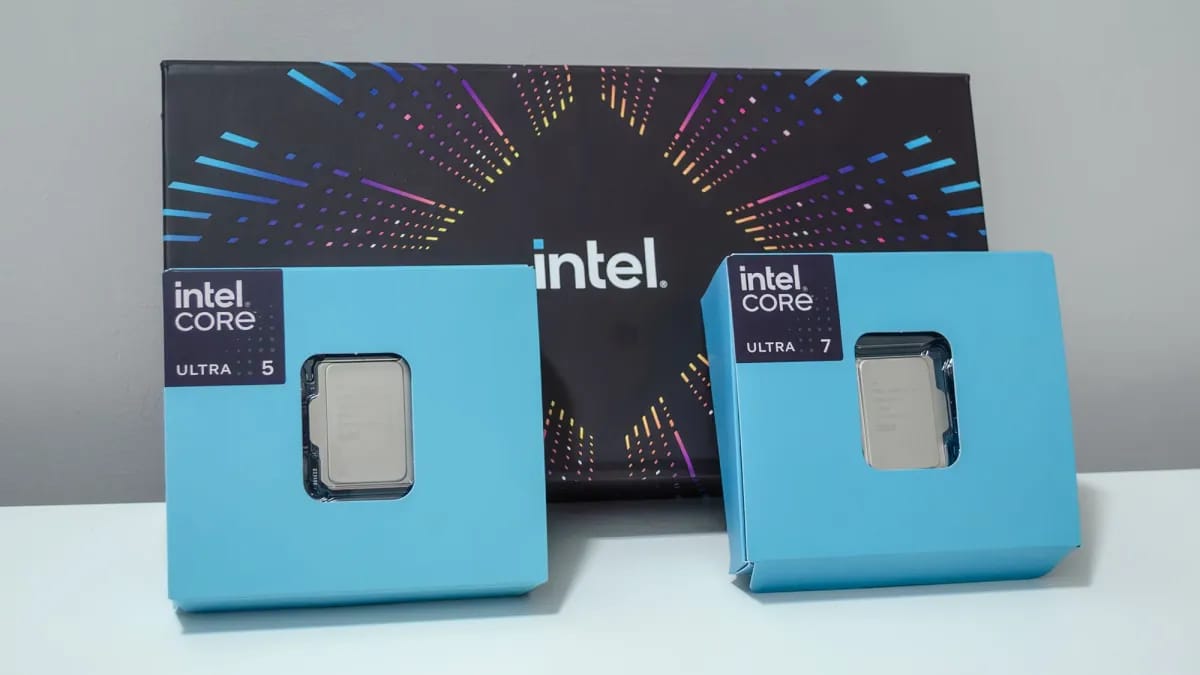
Intel has launched two refreshed Arrow Lake desktop CPUs — the Core Ultra 5 250K Plus at $219.99 and the Core Ultra 7 270K Plus at $299.99 — and the short version is: brilliant productivity chips, frustrating gaming chips.
Both are steps up from the existing Core Ultra 5 245K and Core Ultra 7 265K. The key upgrades are four additional E-cores and slightly faster boost clocks. The 270K Plus lands at 24 total cores (8 performance + 16 efficient) and a 5.5GHz boost, putting it close to the Core Ultra 9 285K — which boosts to 5.7GHz — at roughly half the price. The 250K Plus reaches 18 cores (6P + 12E), up from the 245K's 6P + 8E layout. Both chips also get expanded L3 cache and DDR5 support up to 7200MT/s, around 800MT/s faster than the baseline Arrow Lake-S lineup.
In synthetic benchmarks, the numbers are genuinely impressive. The 270K Plus trades blows with the Core Ultra 9 285K in Cinebench R23 multi-core and comes within 4% of it in single-core. Against AMD, it posts roughly 83% better multi-core and 9% better single-core performance than the Ryzen 7 9800X3D in the same test, and even edges out the Ryzen 9 9950X3D in multi-core. For productivity workloads, creative work, or anything that hammers all cores, these chips are hard to argue with at their price points.
The problem is gaming. Both the 250K Plus and 270K Plus occasionally fall behind their non-Plus Core Ultra 200S counterparts in games — which makes them a tough sell for anyone who primarily plays. Better gaming processors exist at similar or lower prices, and Intel hasn't closed that gap here. If you're building a workstation or a machine that splits time between heavy creative work and gaming, the value case is real. If gaming is your main reason to buy, look elsewhere.
Sources (1)
AI-assisted summary, reviewed by our editors — how we work.
Get the daily digest
Top gaming news in Lithuanian — every day at 9:00.