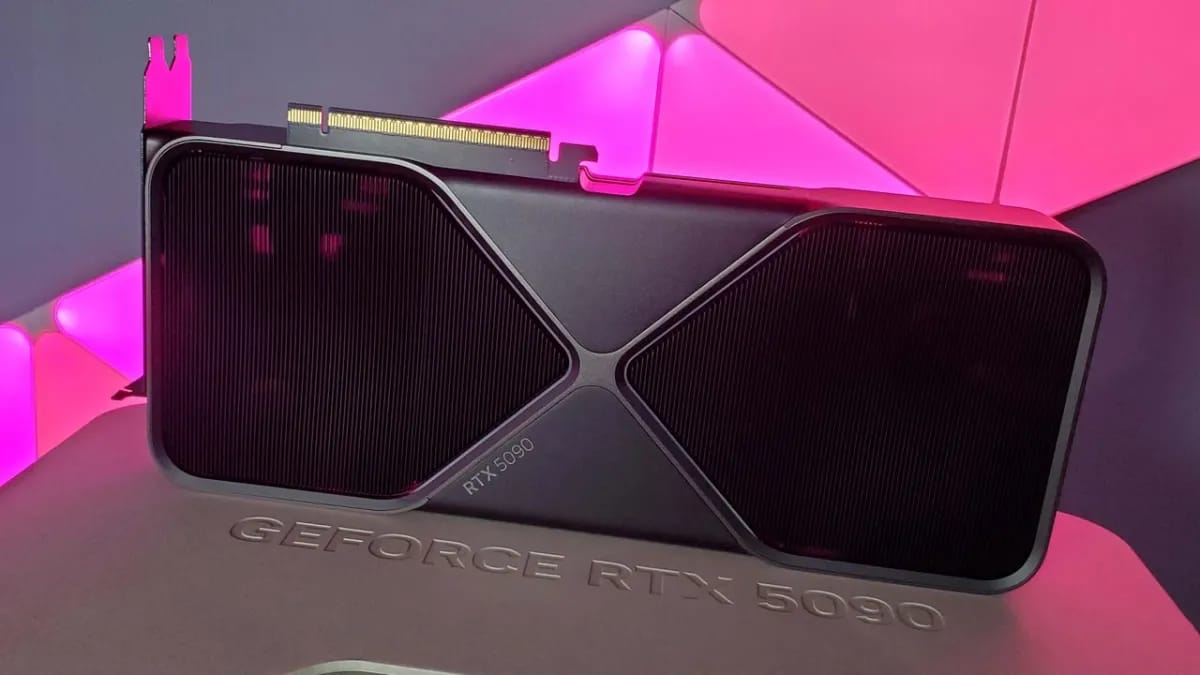
Nvidia's RTX 50-series GPUs have had their hotspot temperature sensor disabled at the driver level since launch, leaving monitoring tools like GPU-Z with only basic GPU and memory temp readings. Now two separate developments are giving users that data back — and one of them is already in a public software release.
CPUID's HWMonitor version 1.65 adds two hotspot sensor rows directly beneath the standard GPU and memory temperature columns for RTX 50-series cards. It's a straightforward update, no leaked tools required. Separately, a Brazilian repair and modding channel, Paulo Gomes, demonstrated that an internal Nvidia diagnostic utility called MODS — Nvidia Modular Diagnostic Software — bypasses the driver-level block entirely. That tool has apparently leaked to some repair shops and Discord servers, though downloading unknown executables from Discord carries obvious risks. A practical example from Gomes' channel showed a Gigabyte RTX 5070 Ti reporting a normal-looking average GPU temp of around 68 °C while its actual hotspot was hitting 107 °C — a sign of poor cooler contact and dried thermal paste. After reseating the cooler and repasting, the hotspot dropped to 100 °C and performance recovered. PC Gamer also ran a quick sanity check on an Asus TUF Gaming RTX 5070 Ti OC Edition using HWMonitor 1.65, running Crimson Desert at 4K with path tracing. The GPU averaged 62–63 °C, with hotspot temps briefly spiking into the mid-80s before settling in the 75–80 °C range — well within normal territory.
Why Nvidia disabled hotspot reporting on RTX 50-series in the first place remains unexplained. The hotspot sensor measures the single hottest point on the GPU die, which is always higher than the average die temperature and is particularly useful for catching cooler contact issues — something that matters more than ever given the sheer variety of AIB cooler designs across the RTX 50-series lineup. Gigabyte cards in particular have had thermal paste concerns flagged before, making the diagnostic value here pretty clear. For most users with a well-functioning card, hotspot temps running 15–25 °C above the average GPU reading is normal and nothing to worry about.
CapFrameX, the free performance monitoring utility, has also confirmed that RTX 50-series hotspot tracking is coming to its feature set soon, so HWMonitor won't be the only mainstream option for long. For anyone seeing unexplained thermal throttling, loud fans, or performance drops on their RTX 50-series card, checking hotspot data is now a straightforward first diagnostic step.
Sources (2)
AI-assisted summary, reviewed by our editors — how we work.
Get the daily digest
Top gaming news in Lithuanian — every day at 9:00.