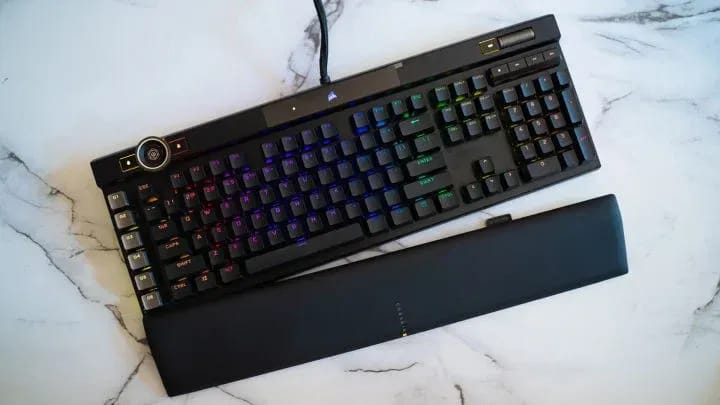
The Cherry MX Ultra Low Profile switch is one of the most interesting mechanical keyboard innovations in recent memory — and somehow, years after its debut, it still hasn't gone mainstream. The Corsair K100 Air Wireless, which launched as one of the priciest keyboards on the market, remains the clearest showcase of what ULP technology can do, and revisiting it only makes the industry's indifference more puzzling.
The MX ULP switch works nothing like a standard mechanical switch that's simply been shrunk down. Instead of a plastic stem pushing onto crosspoints, it uses metal wings that pivot down onto the actuator — a fundamentally different mechanism that lets Cherry hit a total switch height of just 3.5mm and a key travel of only 1.8mm, all inside a board that's 17mm thick at its tallest point. The switches shipped in tactile flavour only, with a bump or a click, and at 65cN actuation force they match the weight of a full-height Cherry MX Clear — a switch known for being on the heavier side. The trick is that the travel is so short, finger fatigue never builds up the way it would on a taller switch. The tactile bump itself is short and sharp rather than the drawn-out feel of a full-height switch, but it's genuinely satisfying rather than a compromise.
The distinction between low-profile and ultra-low-profile matters more than the marketing suggests. Keyboards like the Corsair K60 RGB Pro Low Profile or Logitech G915 X Lightspeed use short low-profile switches — a meaningful size reduction from standard MX switches, but still operating on the same basic mechanical principle. ULP is a different category entirely, not just a few millimetres shaved off. That difference in engineering translates to a noticeably different typing feel, and the K100 Air Wireless demonstrated that ultra-low-profile done right doesn't mean sacrificing the feedback that makes mechanical keyboards worth using in the first place.
What's frustrating is that the technology has largely stalled at the enthusiast tier. The K100 Air Wireless proved the concept works — and works well — yet no wave of ULP desktop keyboards followed. For anyone who types for long sessions and wants a genuinely slim board without giving up tactile feedback, the gap in the market is still wide open.
Sources (1)
AI-assisted summary, reviewed by our editors — how we work.
Get the daily digest
Top gaming news in Lithuanian — every day at 9:00.