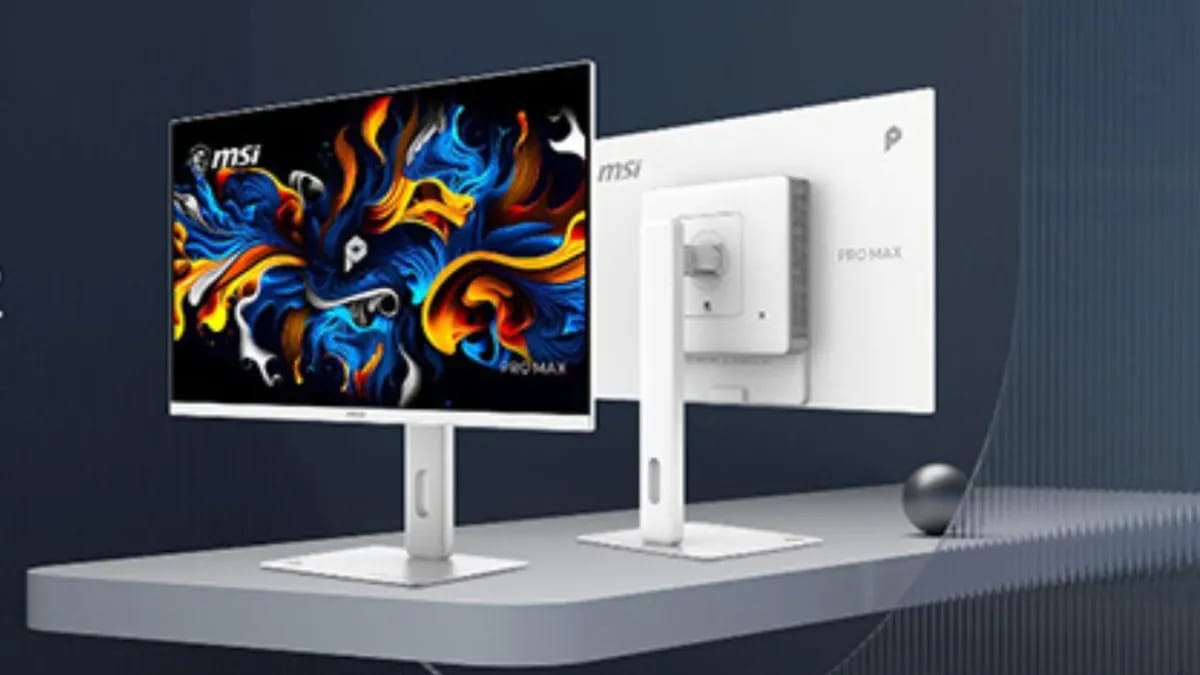
MSI has announced the Pro Max OLED 271UPJW12, a 27-inch 4K OLED monitor built around an inkjet-printed panel made by TCL — not the usual Samsung or LG. No release date or price has been confirmed yet.
The monitor runs at 120 Hz with up to 1,000 nits peak brightness and covers 99% of the DCI-P3 color gamut with Delta E ≤ 2 accuracy. MSI is pushing an optimized RGB stripe subpixel layout that it says closely resembles the uniform RGB structure of traditional LCDs, which should cut down on color fringing and sharpen image clarity — a feature that only recently appeared on LG and Samsung OLED panels. The 120 Hz cap and Pro branding point toward professional creative use rather than gaming, though response times should still be solid given it's OLED.
The big deal here is the panel source. Right now, LG and Samsung have a near-total lock on OLED panels for PC monitors, and TCL has been trying to break into that market for a while. Inkjet printing is a cheaper manufacturing process than the vapor deposition method both incumbents use, which in theory opens the door to lower prices down the line. MSI's QD-OLED counterpart, the Pro Max 271UPXW12G, sits around $700, so the inkjet version would need to undercut that meaningfully to make a real case for itself. That said, non-inkjet OLEDs are already getting cheaper fast — OLED panels regularly show up in the $300–$400 range now, and Alienware launched a $350 OLED gaming monitor earlier this year.
With no pricing or launch window announced, it's hard to judge whether TCL's inkjet tech will actually move the needle on affordability. As an early model, a dramatic price cut seems unlikely, but if inkjet printing gains traction it could give buyers a genuine third option beyond the Samsung-LG duopoly — and that kind of competition is rarely bad for consumers.
Sources (1)
AI-assisted summary, reviewed by our editors — how we work.
Get the daily digest
Top gaming news in Lithuanian — every day at 9:00.