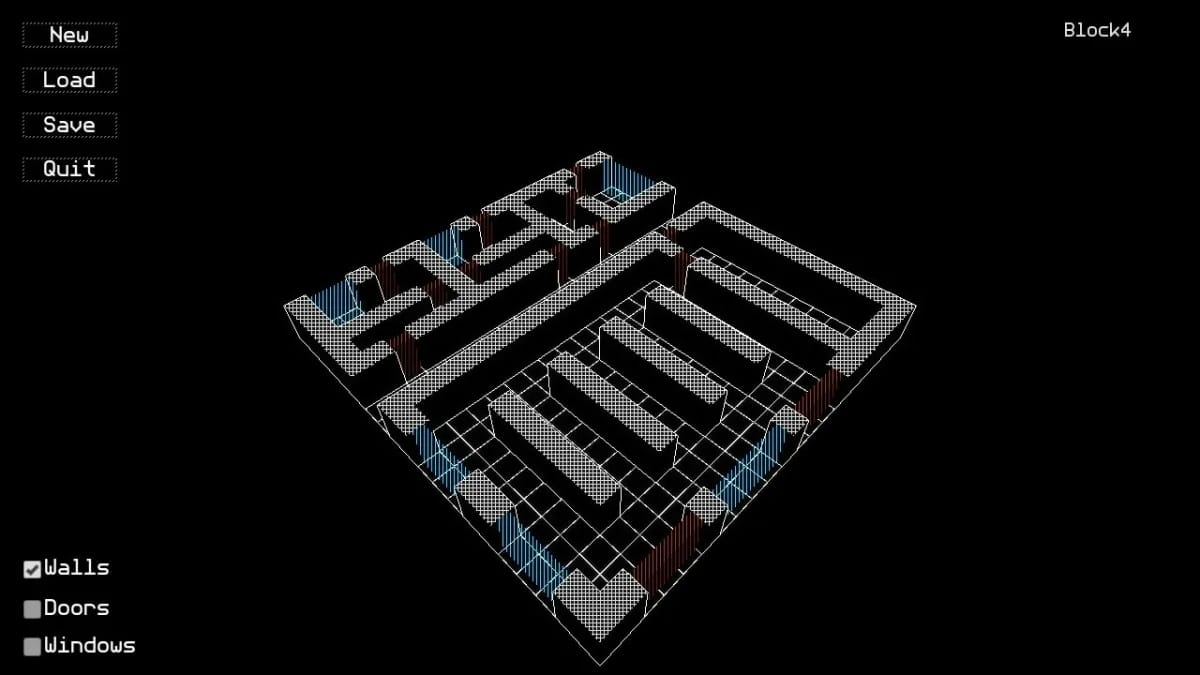

DeadOS, an indie outbreak simulator from developer Benn Powell, lets you engineer a zombie apocalypse from the ground up — and it turns out getting one started is harder than it looks.
Powell, known for his Randomizer mods for the Resident Evil series, built DeadOS after being inspired by the opening of Resident Evil 3, where a cutscene shows the city falling apart before the game proper begins. He wanted to simulate exactly that moment — the collapse itself — which games almost never let you play through. Development started in 2019, just before Covid-19 hit, and the pandemic shaped the design: Powell added an R-rate display showing how many people each zombie infects on average. If that number stays above one, the infection grows exponentially. Below one, it fizzles out.
The simulator drops you into a procedurally generated 3D city where you dial in parameters before hitting play: city size, population density, number of armed civilians and police, virus transmissibility, and zombie speed. There's no win condition — you're watching a system run, not chasing a score. Patient zero is placed, the clock starts, and the outbreak either takes hold or collapses on its own. In one early test, a fast-moving, near-instant-conversion pathogen was unleashed on a city nicknamed Zombieville — only for patient zero Ruby Mancini to get hit by a car before infecting a single person.
The slow-versus-fast zombie debate gets a concrete answer here: fast zombies are dramatically more effective at triggering a full collapse, because they overwhelm human reaction time and outrun the natural bottlenecks — traffic, distance, armed resistance — that tend to snuff out slower outbreaks before they reach critical mass. DeadOS is available now as a sandbox sim for players who want to stress-test their apocalypse theories rather than survive one.
Sources (1)
AI-assisted summary, reviewed by our editors — how we work.
Get the daily digest
Top gaming news in Lithuanian — every day at 9:00.