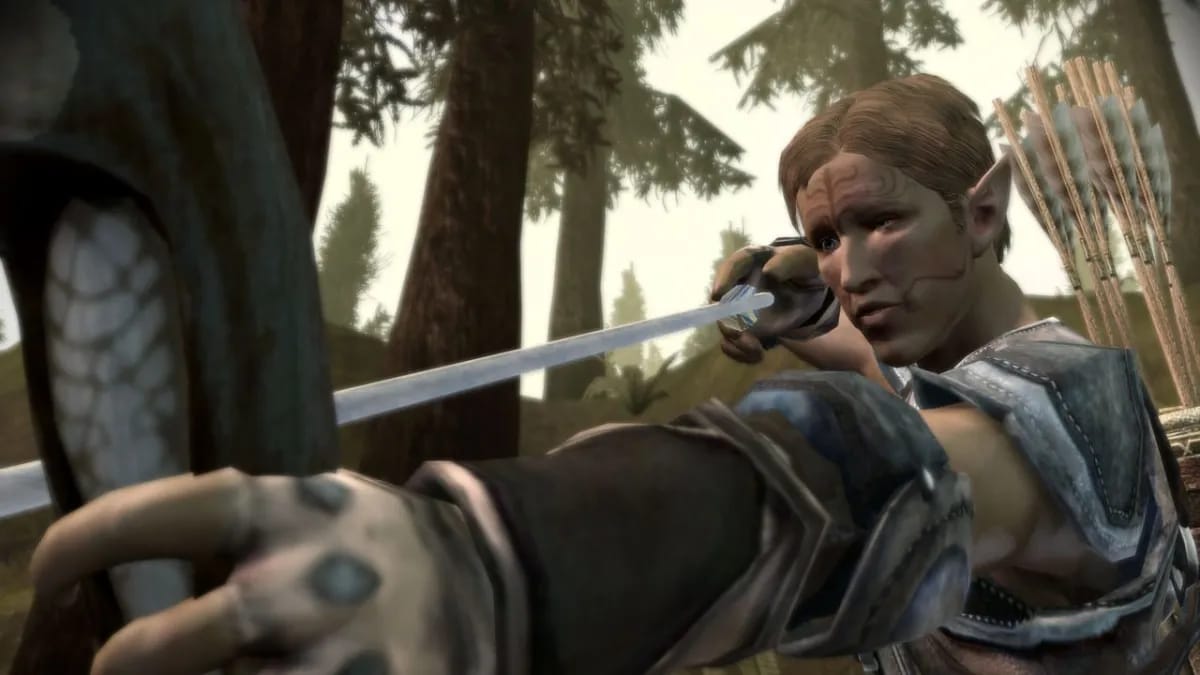
David Gaider — lead writer on the first three Dragon Age games at BioWare — spoke to GamesRadar about the risks generative AI poses to game development pipelines, and he's not holding back. His core concern isn't just quality; it's what happens to the people who were supposed to learn the craft.
Gaider says AI's inconsistency makes it a nightmare to work with in practice. You can't easily audit its output, you don't know why it produced a given result, and cleaning up after it "would be frustrating as hell" — his words. He's blunt that the technology "is not ready for prime time," but adds there are "a lot of executives who really, really want it to be." On the junior dev pipeline question, he's equally direct: "How are we going to train up the next generation of devs if we eliminate every entry-level task?" The rote work that AI is supposed to replace is also the work that teaches people how to do the job. He'd be more comfortable if AI were treated as an assistant rather than a replacement. He's also skeptical of the "it's just for placeholders and prototypes" defense of creative AI use, pointing out that artists never agreed to have their data used to train these systems.
Gaider wasn't the only voice in GamesRadar's feature. Iron Lung and Dusk creator David Szymanski said he's not categorically against AI as a technology but draws the line at hand-waving "the ethical concerns about plagiarism, environmental impact, and job security." Marvel Rivals executive producer Danny Koo flagged plagiarism as a specific worry for his team — they deliberately avoided AI art tools to make sure the game's assets weren't, in his word, "poisoned." The broader reaction to the recently revealed Crazy Taxi reboot, which drew skepticism over apparent AI-assisted visuals, suggests player audiences are picking up on the same unease.
The through-line across all these perspectives is that the industry's AI push is being driven more by executive enthusiasm than by practical readiness or ethical clarity. Whether studios will slow down long enough to reckon with those concerns — or whether the cost-cutting logic wins out — remains the open question hanging over the whole conversation.
Sources (1)
AI-assisted summary, reviewed by our editors — how we work.
Get the daily digest
Top gaming news in Lithuanian — every day at 9:00.