
Hasbro has recorded a $56 million non-cash impairment in its Q2 financial report, the result of cancelling several games that were slated to release in 2028 and beyond. CEO Chris Cocks confirmed the write-down on an investors call but did not name which projects were cut.
To be clear on the accounting: this isn't $56 million walking out the door. Like the $766 million impairment Sony took against Bungie, it reflects an unexpected drop in the book value of capitalized development costs — not a direct cash loss. Still, it's a significant signal that Hasbro's aggressive push into games hasn't gone to plan. Just a couple of years ago, Dan Ayoub, head of digital product development at Wizards of the Coast, was publicly claiming Hasbro had "over $1 billion in games right now being developed" and calling videogames "an integral part of Hasbro's strategy going into the next 100 years." That confidence has clearly been revised. A big-budget GI Joe game announced in 2021 is in murky territory — Hasbro told Wccftech in February it hadn't been cancelled, but the team was "taking time to evaluate the path forward." A D&D game from Stig Asmussen's Giant Skull studio was cancelled outright earlier this year. Exodus, the Mass Effect-style RPG formerly led by BioWare veteran James Ohlen, is still in development, and Cocks flagged it alongside Warlock as a driver of what he called Hasbro's "peak year for digital investment" in 2026.
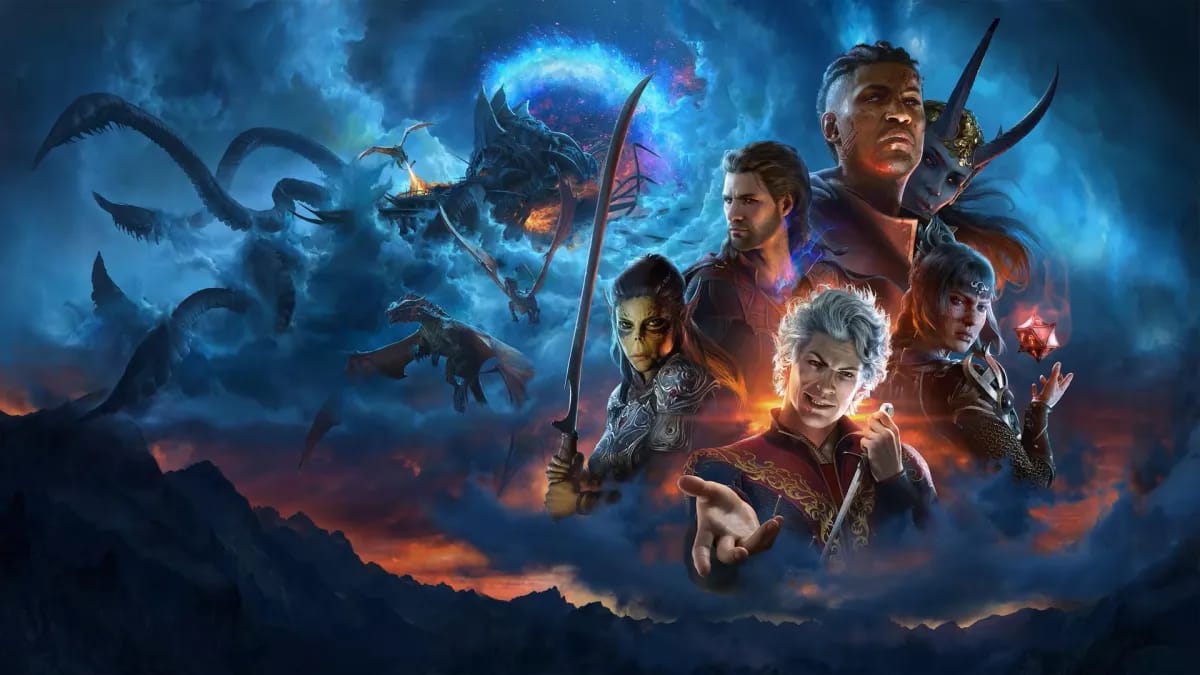
Cocks framed the cuts in terms that echo Xbox's recent studio purge — focus on the biggest franchises, cut the rest. He said Hasbro is "focusing our digital investment behind the franchises, platforms, and partners where we see the clearest upside and where Hasbro has the strongest right to win," pointing to trading card games and RPGs as the core pillars, backed by Magic: The Gathering and Baldur's Gate 3. He called Baldur's Gate 3 "one of the biggest and most awarded role-playing games of the last decade" — which is accurate, but also a little awkward given that Larian's game launched in 1.0 form three years ago, still pulls tens of thousands of concurrent players, and Hasbro has yet to announce any follow-up. That silence has been widely read as symptomatic of broader strategic drift at the company.
Looking ahead, Cocks said Hasbro aims to cut total digital spend by at least 25% per year by 2028, achieved through moving development to lower-cost regions and adopting "more mature tools, teams, and production processes." AI wasn't explicitly named in this context, though Cocks has previously expressed enthusiasm for generative AI — and the company has already drawn criticism on that front. The picture is one of a company that swung hard at games, missed on several bets, and is now pulling back to a narrower, more defensible position.
Sources (1)
AI-assisted summary, reviewed by our editors — how we work.
Get the daily digest
Top gaming news in Lithuanian — every day at 9:00.
Related on Baldur's Gate III

Baldur's Gate 3 mod turns Mizora into a fully recruitable companion
Modder WorldWalker42 has released Mizora Joins the Party for Baldur's Gate 3, turning the scheming cambion — previously just a thorn in Wyll...

Baldur's Gate 3 mod finally adds a proper third-person camera
Modders have cracked a high-quality third-person camera for Baldur's Gate 3, giving players a behind-the-shoulder view that the base game ne...

Baldur's Gate 3 fan mod delivers a 6-hour Astarion campaign with 4 endings and 6 new companions
A fan-made mod for Baldur's Gate 3 offers a full mini-campaign centered on Astarion, running around six hours and featuring four different e...