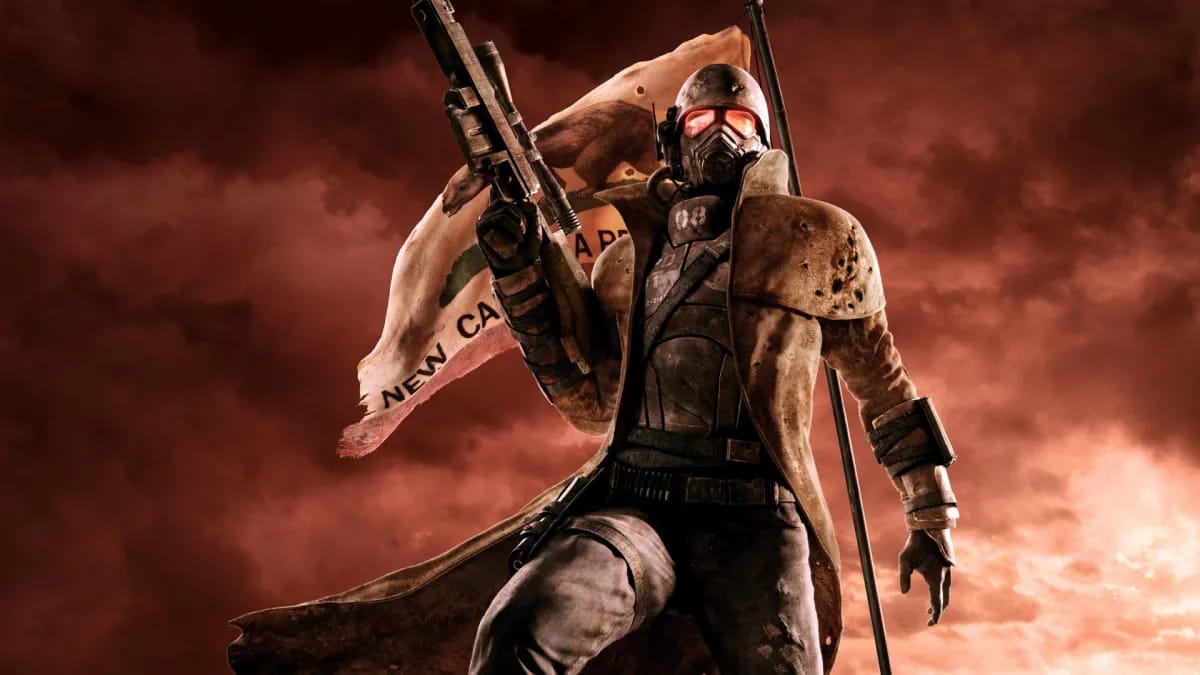

Fallout: New Vegas director Josh Sawyer has opened up about the design philosophy behind the game's factions, explaining that making them feel like collections of real, disagreeing people — rather than monolithic ideological blocs — was a core goal from the start.
Speaking on The Examined Game podcast, Sawyer said the team's priority was ensuring faction members felt like individuals with their own perspectives. "When a faction feels monolithic, where every member of the faction is just like, 'I'm this guy, I believe in this thing, and this is the thing that everyone believes in' — one, nobody's like that, and two, it paints too simple of a picture for the player and their decision making." He used the NCR as the clearest example: the republic contains virtuous idealists, well-meaning but incompetent soldiers, and outright petty and malicious actors all at once. "That's a democracy, right? That's being in a republic." Caesar's Legion gets the same treatment from the other direction — Caesar himself has a coherent, if disturbing, intellectual framework, while his rank and file are, in Sawyer's words, "really repulsive and abhorrent in their beliefs and their outlook." The tension between the ideology at the top and the people carrying it out is the point. "You have to wrestle with the fact that it contains multitudes."
New Vegas, released in 2010 by Obsidian Entertainment, is widely regarded as one of the strongest entries in the Fallout series precisely because of this faction writing. Sawyer and his team had a compressed development window — roughly 18 months — yet managed to build out the NCR, the Legion, Mr. House, and Yes Man as genuinely distinct and internally complex power structures. That complexity is what keeps the game's ending choices genuinely difficult: there is no clean good-guy option, because every faction has people in it who would make you reconsider. Minor characters like Canyon Runner — a Legion slavedriver who unconsciously betrays his pre-Legion tribal identity through throwaway dialogue — do more ideological work than entire questlines in lesser RPGs.
Sawyer wrapped up his point by tying faction design back to what makes RPGs work at their best: "I like it when factions and people are complicated and the player, over time, they have to keep thinking about — not just the people they're talking to, but also their place in it, because they're a participant." With Fallout: New Vegas still generating discussion and modding activity well over a decade after release, it's clear that philosophy landed.
Sources (1)
AI-assisted summary, reviewed by our editors — how we work.
Get the daily digest
Top gaming news in Lithuanian — every day at 9:00.
Related on Fallout: New Vegas

Fallout: New California mod lands on GOG as a standalone release
Fallout: New California, the massive fan-made mod for Fallout: New Vegas, is now available directly through GOG — making it easier than ever...

Fallout: New Vegas designer Chris Avellone says the TV show's dialogue makes him 'embarrassed'
Chris Avellone, lead designer on Fallout: New Vegas, has gone on record saying some of the dialogue in Amazon's Fallout TV series makes him...

Fallout: New Vegas mod adds a Dark Brotherhood-inspired assassin faction to the Mojave
A new Fallout: New Vegas mod called Twilight Eternal transplants the Dark Brotherhood from Oblivion into post-apocalyptic Nevada as a new jo...