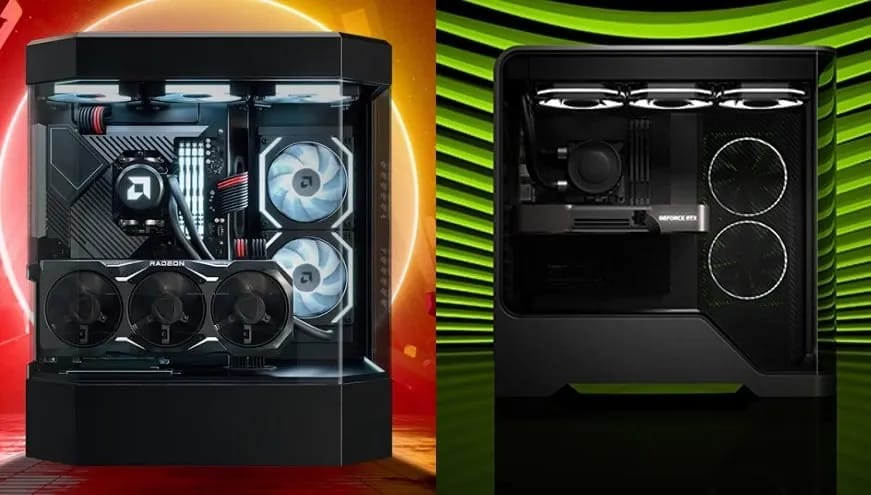
Both Nvidia and AMD are reportedly hiking the prices they charge hardware partners, piling more pain onto PC builders already dealing with sky-high GPU costs. The moves come amid a broader memory shortage driven by AI companies locking up chip supply from Samsung, Micron, and SK Hynix — a crunch that has been running for eight or nine months and shows no sign of easing.
Nvidia is reportedly raising partner prices by up to 30 percent, according to Taiwanese outlet Economic Daily News on July 28. AMD is following with a smaller 10 percent hike, per hardware leaker Harukaze5719, with speculation that AMD was waiting for Nvidia to move first before doing the same. The real-world impact is already visible: the Radeon RX 9070 XT, which launched at $600 MSRP, is now selling for $700–$750 on Newegg. Nvidia's comparable GeForce RTX 5070 Ti, which launched at $750, is sitting around $1,000. That means AMD buyers are now paying what Nvidia prices used to look like, and Nvidia buyers are paying nearly double what AMD was charging last year. The situation is bad enough that 4GB GPUs are making a comeback — AMD's new budget card, the RX 9050, ships with a 4GB variant exclusive to certain regions at $280, a spec Digital Foundry called "concerning" given how poorly modern games handle low VRAM.
The root cause isn't a typical hardware shortage. Unlike previous GPU crunches driven by crypto miners clearing out retail stock, this one goes deeper. AI companies made advance commitments to buy memory chips from the major manufacturers before those chips even existed, according to Reuters. Even after many of those deals fell through, Samsung, Micron, and SK Hynix kept diverting production capacity toward AI and datacenter customers. A class action lawsuit alleging price fixing is in progress, but any resolution is likely years away. The knock-on effect hits everything that uses memory — from gaming PCs to consoles to cars.
The gaming community's frustration is compounded by a broader sense that AI hasn't delivered on its promises to players. The upscaling tech — DLSS, FSR, and their equivalents — has been genuinely useful, but the push into frame generation and features like DLSS 5 remains divisive, and the AI-driven NPC and inventory systems teased at CES 2024 have largely failed to materialize. For now, anyone hoping to build or upgrade a gaming PC is looking at a market where both major GPU vendors are moving prices in the same direction at the same time.
Sources (12)
- rss ign.com · /articles/amd-reportedly-plans-to-raise-g...
- rss rockpapershotgun.com · /amd-graphics-card-price-hikes-are-report...
- rss gamespot.com · /articles/no-matter-which-you-choose-grap...
- rss rockpapershotgun.com · /samsung-whove-been-accused-of-worsening-...
- rss eurogamer.net · /amd-price-rise-gpu-memory
- rss kotaku.com · /cant-decide-between-nvidia-and-amd-graph...
- rss pcgamer.com · /hardware/graphics-cards/amd-is-reportedl...
- rss gamespot.com · /articles/all-of-2027s-ram-could-already-...
- rss ign.com · /articles/ai-is-making-games-worse-and-fo...
- rss pcgamer.com · /hardware/motherboards/gigabyte-is-launch...
- rss ign.com · /articles/the-ram-crisis-seems-to-be-expa...
- rss rockpapershotgun.com · /the-three-biggest-ram-makers-have-alread...
AI-assisted summary, reviewed by our editors — how we work.
Get the daily digest
Top gaming news in Lithuanian — every day at 9:00.