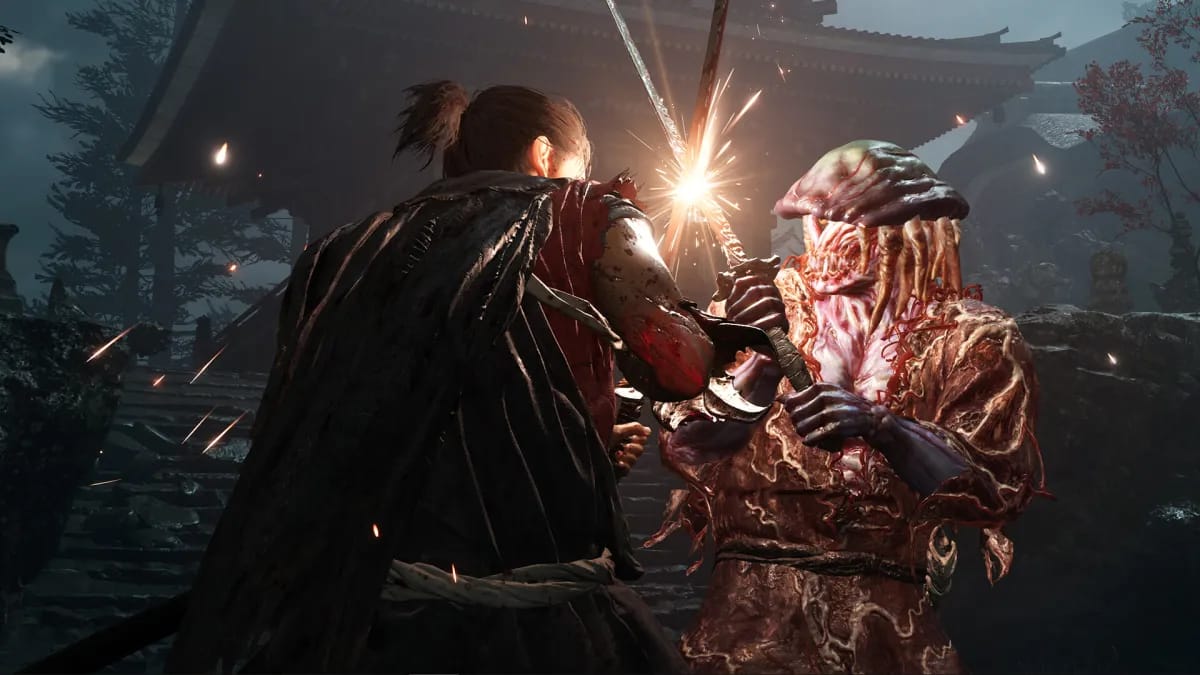

Onimusha: Way of the Sword launches September 4, and Capcom is leaning hard into Japanese history, mythology, and samurai cinema to shape everything from its locations to its monsters. Director Satoru Nihei spoke to Polygon about how that grounding in reality defines the game's identity.
The game is set in Edo-era Kyoto and stars Miyamoto Musashi — the real legendary swordsman — rather than an original protagonist. Nihei says Musashi was the first name that came up when the team thought about who should lead the game: "He was this character who wasn't afraid to fight dirty and use whatever means necessary to claim victory. That was something that we thought could really factor into the gameplay we wanted to aim for. But he also has this sense of humanity. He has this coarse, rough edge to him, which we thought would make him an interesting character to incorporate in Onimusha." That fighting philosophy — pragmatic, ruthless, principled — feeds directly into how combat feels, which Nihei describes as meaningfully different from earlier entries in the series.
Even the invented enemies trace back to real mythology. A demo enemy called Rasho-gan — a ghostly creature that tricks villagers into surrendering their body parts — is an original creation, but one built on genuine folkloric foundations. Capcom's approach throughout has been to use real-world myth as a design compass rather than pure aesthetic dressing. The result is that even the game's most surreal sequences, including a nether realm full of floating debris, sit on top of locations and ideas that feel historically anchored.
Onimusha: Way of the Sword is a revival of a PS2-era Capcom series that quietly went dormant after 2006. At its peak, Onimusha looked like it could grow into a franchise on the scale of Resident Evil, and its influence on the samurai action genre — games like Ghost of Tsushima arguably owe it a debt — makes the 20-year gap feel all the more significant. Way of the Sword arrives into a crowded field of samurai games, but its explicit commitment to Japanese historical and cultural sources gives it a distinct angle that more fantastical takes on the genre don't share.
Sources (2)
AI-assisted summary, reviewed by our editors — how we work.
Get the daily digest
Top gaming news in Lithuanian — every day at 9:00.
Related on Onimusha: Way Of The Sword

Onimusha: Way of the Sword gets a free prequel webtoon following Sasaki Ganryu
Capcom's Onimusha: Way of the Sword only just launched, and it already has an official companion webtoon to go with it. The prequel webcomic...
Onimusha: Way of the Sword hits 1 million sales on day one, Capcom eyes more dormant IP revivals
Onimusha: Way of the Sword sold over one million copies on its launch day, Capcom has confirmed. That makes it the first new Onimusha game i...

Onimusha: Way of the Sword release date and unlock times confirmed
Onimusha: Way of the Sword launches on PC on Friday, September 4, with a simultaneous global release at 12 am EDT / 5 am BST. Unlike the con...