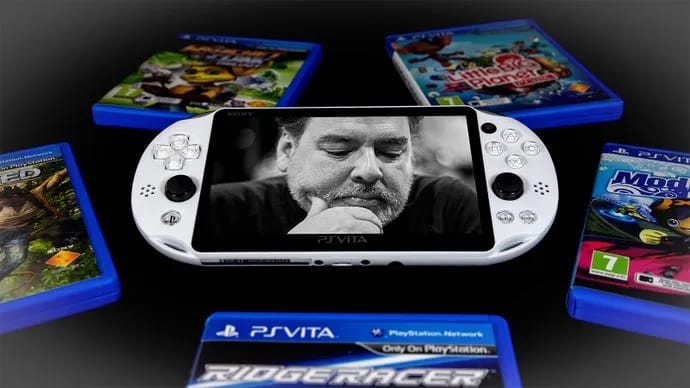
Former PlayStation boss Shawn Layden has expanded on his earlier comments that Sony should have built a PSP 2 instead of the PS Vita — and his argument comes down to one thing: the Vita was overengineered for its own good.
Speaking in an interview, Layden said the core problem with the original PSP was simple: it only had one analogue stick. Players raised on the DualShock found that deeply limiting. A PSP 2, in his view, just needed to fix that — better sticks, a second stick, done. Instead, Sony loaded the Vita with features nobody asked for: a rear touch panel, an OLED screen, and proprietary memory cards that were incompatible with existing PSP media and expensive to buy. Each addition drove up the bill of materials, which drove up the retail price, which drove down sales. "I think we put too much on it which made the cost of producing it higher so the cost associated with selling it had different impacts around that," Layden said. The OLED screen, specifically, he called "just unnecessary expense."
To illustrate the point, Layden referenced a story about Shigeru Miyamoto at Nintendo — possibly apocryphal, he admitted, but instructive. Miyamoto would reportedly assign a yen value to every feature during development, and once the total hit the price of the finished product, he'd stop adding. The principle is straightforward: there's a tipping point where a product contains more value than the market will pay for it. Layden applied the same logic to games, citing Gran Turismo as a series that eventually crossed that line — going from 65 cars in the first game to 290 in the second, chasing a kind of completionism that added cost without proportionally adding appeal. The Vita, in his reading, fell into the same trap: a hardware team that kept adding whizzbang features past the point where any of them meaningfully moved the needle for consumers.
Layden's comments land as a candid post-mortem from someone who was inside PlayStation during the Vita era. The handheld launched in 2011 in Japan and 2012 in the West, and while it built a devoted niche audience — particularly for JRPGs and indie games — it never came close to matching PSP sales and was quietly discontinued by 2019. Sony has not returned to dedicated handheld hardware since, making Layden's argument feel less like historical revisionism and more like a live question: if the Vita had launched as a leaner, cheaper PSP 2, would Sony still be in the handheld market today?
Sources (1)
AI-assisted summary, reviewed by our editors — how we work.
Get the daily digest
Top gaming news in Lithuanian — every day at 9:00.