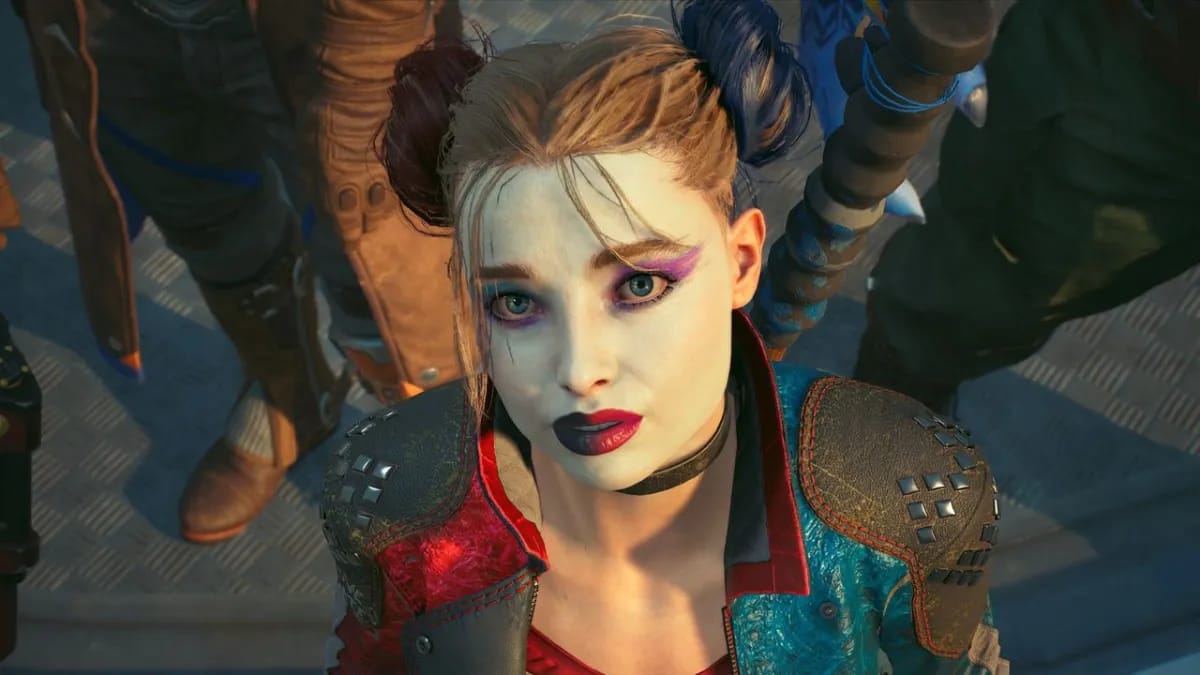
Two of the key developers behind Suicide Squad: Kill the Justice League have spoken candidly to Bloomberg about how the game's troubled production nearly drove them out of the industry entirely. Axel Rydby, the game's co-director, and Johnny Armstrong, associate design director, both left Rocksteady after the game's failure and are now building a small indie project together.
Rydby joined Rocksteady in 2018, and early on there was genuine optimism — even about the live-service format — with an internal understanding that the game should be generous enough that players wouldn't feel pressured to spend. That changed as delays piled up and executive meetings shifted from creative questions to monetization targets. "That's when I started feeling like I wasn't making games anymore," Rydby told Bloomberg. "I was following a spreadsheet, some elusive marketing-analysis spreadsheet that no one could present clearly. I kind of felt like this isn't the gaming industry I wanted to work in." Armstrong pointed to overconfidence coming off the Batman: Arkham trilogy as an early problem — the studio knew how to build bespoke narrative sandboxes, not live-service games with entirely different design demands. The scale made proper testing difficult, and a pattern of short, repeated delays meant there was never enough runway to fix anything fundamental. "Six months isn't enough to do any fundamental changes," Rydby said. "That's just enough to fix as many bugs as you can." Armstrong described the grind of putting in enormous hours with nothing visibly improving: "Everyone felt like they were having to run to stand still." When Warner Bros. eventually pulled the plug on the game, Armstrong said he felt completely hollowed out. "I felt everything drained from me. I said, 'I can't do this again. I don't know if I'm done with the industry, but I'm done.' I could feel myself coming apart at the seams."
Suicide Squad: Kill the Justice League launched in early 2024 to poor reviews and worse sales, and was later reported to have cost Warner Bros. around $200 million in losses. The failure was a stark fall from grace for Rocksteady, a studio that had built one of the most respected reputations in the industry on the Arkham series. The game's live-service pivot — driven heavily by corporate pressure rather than creative direction — became a widely cited example of how publisher mandates can derail even talented studios.
Rydby and Armstrong have since teamed up on Secret of Circadia, an indie deckbuilding RPG with a Kickstarter campaign seeking just over $11,000. The project's page describes it as "an open love letter to the indie gaming industry" — citing Slay the Spire, Balatro, Hades, Stardew Valley, Hollow Knight, and Moonlighter as inspirations — from two AAA developers who got tired of money getting in the way of making games. The page also includes an explicit anti-generative AI disclaimer. "I think as an industry we are severely losing our way," Rydby told Bloomberg. "It used to be passion projects that you loved and hoped other people loved too."
Sources (4)
AI-assisted summary, reviewed by our editors — how we work.
Get the daily digest
Top gaming news in Lithuanian — every day at 9:00.