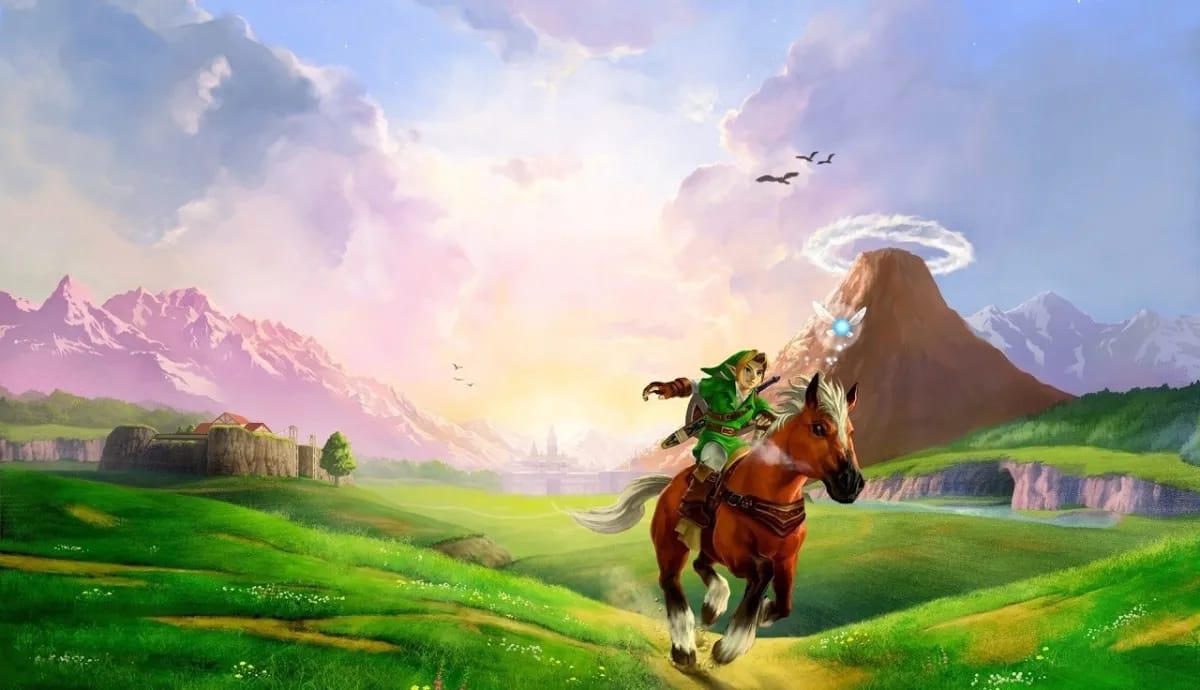

Nintendo surprised everyone by announcing remakes of both The Legend of Zelda: Ocarina of Time and Star Fox 64 for 2026 — the same calendar year, 15 years after both games got 3DS remasters. On the surface it's an odd pairing, but there's a clear logic behind each one.
For Star Fox, the timing is deliberate. Fox McCloud is set to appear prominently in the upcoming Super Mario Galaxy Movie, and Nintendo has a proven playbook of capitalising on film buzz — Mario vs. Donkey Kong, Princess Peach: Showtime, Luigi's Mansion 2 HD, and Donkey Kong Bananza all followed the first Super Mario Bros. Movie's box-office run. Beyond the marketing angle, Star Fox genuinely needs a reset. Star Fox Zero landed on the Wii U, Nintendo's lowest-selling home console, and the reception gave nobody a reason to track one down. Before that, Star Fox: Assault and Star Fox Command — the last original entries on popular hardware — came out over two decades ago. Entire generations of players know Fox, Falco, and Wolf only as Smash Bros. fighters. Notably, Nintendo is calling the remake simply Star Fox rather than Star Fox 64, signalling that this is meant as a franchise relaunch, not just nostalgia bait. The game is being developed by Velan Studios, the team behind Knockout City and Mario Kart Live: Home Circuit. Developers have told the author that remakes serve as a way to get a handle on a franchise and new technology — Pokémon's Junichi Masuda and Shigeru Ohmori said in 2019 that Let's Go, Pikachu and Let's Go, Eevee helped them understand the shift from handheld to console development, and Halo Studios used its ground-up remake Halo: Campaign Evolved to learn Unreal Engine 5. Star Fox could serve the same purpose for Velan ahead of an original entry.
Ocarina of Time needs less justification — it's one of the most acclaimed games ever made — but a full remake still makes sense for Zelda. The series has evolved dramatically since 1998, and a modernised version would let a new generation experience the game without the friction of N64-era controls and visuals. The 3DS remaster helped, but a ground-up remake is a different proposition entirely. With Breath of the Wild and Tears of the Kingdom having redefined what Zelda can be, revisiting the game that set the template for 3D Zelda gives Nintendo a chance to show how far the series has come while reintroducing the story and structure that defined it.
Both announcements land in the Switch 2's second year, and together they cover two very different needs: one is a franchise resurrection, the other is a prestige remake of a stone-cold classic. Whether either lives up to the originals depends entirely on execution, but the reasoning behind both is sound.
Sources (2)
AI-assisted summary, reviewed by our editors — how we work.
Get the daily digest
Top gaming news in Lithuanian — every day at 9:00.
Related on The Legend of Zelda: Ocarina of Time

Ship of Harkinian devs confirm AI use, push back on 'vibecoded slop' claims
Harbour Masters, the team behind the popular Ocarina of Time PC port Ship of Harkinian, is at the center of a community blowup after evidenc...

Ocarina of Time Remake's Divisive Character Models May Be Rooted in Miyamoto's Love of Puppetry
The Zelda Direct this week finally showed gameplay for the Ocarina of Time remake, and while nostalgia hit hard, the new art style — especia...

Walmart Coupon Code SAVE3X Can Take $20 Off Ocarina of Time Preorders
The Legend of Zelda: Ocarina of Time remake for Switch 2 is already discounted at Walmart and Amazon, but a promo code at Walmart could knoc...