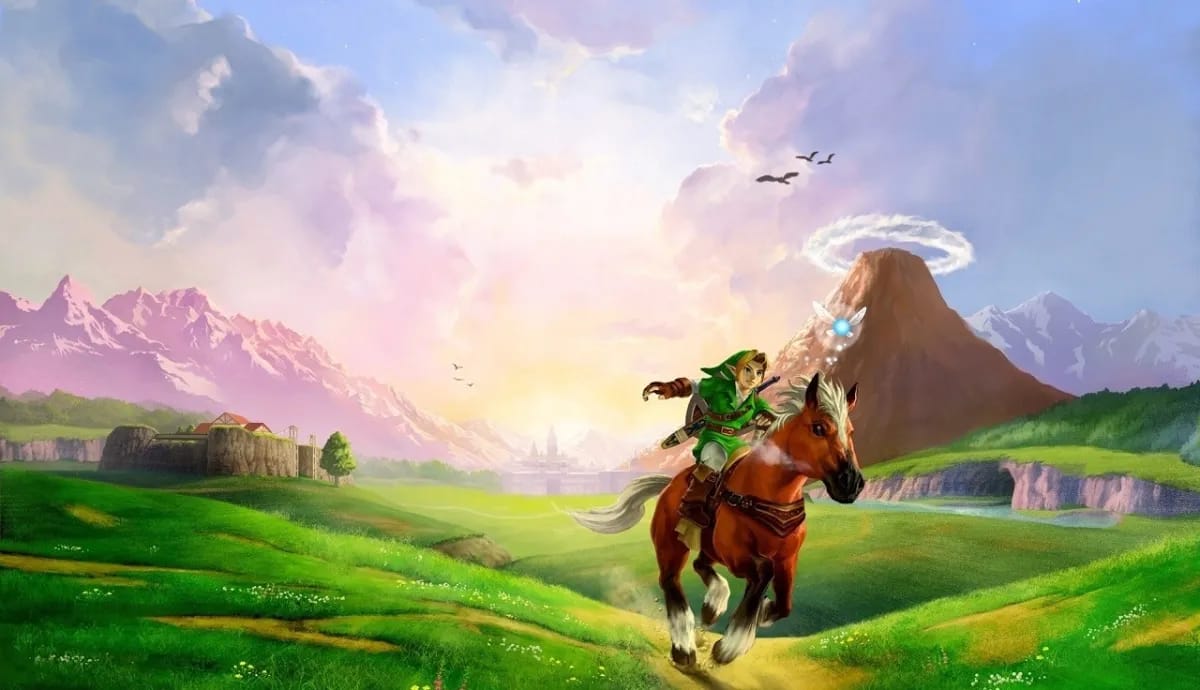

The Zelda Direct this week finally showed gameplay for the Ocarina of Time remake, and while nostalgia hit hard, the new art style — especially Link's character model — split the community almost immediately. Nintendo veteran Takaya Imamura has a theory about why.
Imamura, who spent over 30 years at Nintendo working on Star Fox and F-Zero and served as art director on Majora's Mask, weighed in on Twitter/X with a pointed observation: "What I felt upon seeing this character model of Link is that Miyamoto-san's love of puppet dramas (ningyogeki) is strongly reflected here too!" He was careful to frame it as personal speculation in a follow-up post, but coming from someone who worked directly alongside Miyamoto for decades, it's not a throwaway comment.
Miyamoto's affection for puppetry is well-documented and has surfaced across Nintendo's history in ways fans may not have consciously connected. The original Star Fox cast bears a clear visual resemblance to The Muppets, and the very first Star Fox game's 1993 TV ad campaign literally used puppets. Most memorably, Nintendo's 2015 E3 presentation went all-in on the aesthetic, partnering with The Jim Henson Company to turn Miyamoto, then-Nintendo of America president Reggie Fils-Aimé, and the late Nintendo president Satoru Iwata into full Muppet-style puppet versions of themselves. Fils-Aimé later told IGN that Miyamoto had personally championed the idea. Beyond Nintendo, the visual DNA of the Ocarina of Time remake's sharp-nosed, large-eyed character designs has drawn comparisons to specific Japanese puppet TV productions — particularly NHK's The New Three Musketeers from 2009–2010 and a 2014 puppet adaptation of Sherlock Holmes. Notably, the puppets for The New Three Musketeers were built by Studio Nova, the same legendary Japanese puppet maker behind the physical dolls used to create Dragon Quest 7 Reimagined's character models. Japan has a rich tradition of puppet television dating back to the 1950s, and international imports like Gerry Anderson's Thunderbirds also left a lasting mark on Japanese pop culture and anime aesthetics. Some community members have also drawn comparisons to the 1982 fantasy film The Dark Crystal and its Netflix prequel series, citing the oversized plastic-looking eyes and exaggerated facial features as a shared visual language.
Reaction to the remake's art direction remains divided, but Imamura's framing gives the design choices a clearer creative lineage — whether or not Miyamoto explicitly signed off on that direction. If the puppet theatre influence is intentional, it would be consistent with a design philosophy Miyamoto has returned to repeatedly across his career.
Sources (2)
AI-assisted summary, reviewed by our editors — how we work.
Get the daily digest
Top gaming news in Lithuanian — every day at 9:00.
Related on The Legend of Zelda: Ocarina of Time

Ship of Harkinian devs confirm AI use, push back on 'vibecoded slop' claims
Harbour Masters, the team behind the popular Ocarina of Time PC port Ship of Harkinian, is at the center of a community blowup after evidenc...

Walmart Coupon Code SAVE3X Can Take $20 Off Ocarina of Time Preorders
The Legend of Zelda: Ocarina of Time remake for Switch 2 is already discounted at Walmart and Amazon, but a promo code at Walmart could knoc...

A September Nintendo Direct Is Almost Certain — Here's Why
Nintendo has held a Direct in September in nine of the last ten years, and 2025 looks set to continue that streak. The only break was 2024,...